Why Safe Driveway Cleaning Matters More Than You Think
Your driveway is one of the first things people notice when they pull up to your home, yet it takes a beating from oil drips, tire marks, mildew, and years of foot traffic. We have cleaned hundreds of driveways over the years, and the most common mistake we see homeowners make is reaching for the highest pressure setting and blasting away without a plan. That approach can etch, pit, or permanently scar your concrete. Proper driveway cleaning is about restoring that bright, uniform surface without sacrificing the integrity of the material underneath. In this guide, I’ll walk you through exactly how we get a driveway spotless while protecting the concrete, so you can enjoy lasting curb appeal rather than a short-lived shine followed by costly repairs.
Understanding Your Concrete Before You Start
Before any driveway cleaning begins, we always assess the surface. Concrete seems indestructible, but it’s actually a porous material that can be damaged by excessive force, harsh chemicals, or improper technique. Knowing what you’re working with is the first step toward a spotless, undamaged finish.
Not all concrete is equal. The age, finish, and condition of your driveway all affect how you should clean it. Here are the key factors we evaluate first:
- Age of the concrete: Fresh concrete (less than a year old) hasn’t fully cured and is far more vulnerable to pitting.
- Surface finish: Broom-finished, stamped, or decorative concrete each react differently to pressure.
- Existing cracks or spalling: High pressure can worsen these flaws quickly.
- Type of staining: Oil, rust, organic growth, and paint all require different treatment methods.
Once we understand these variables, we can choose the right pressure, nozzle, and cleaning solution. This diagnostic step is what separates a professional result from a rushed weekend job. Rushing in with a 0-degree nozzle on brittle, aging concrete is a recipe for permanent damage that no amount of sealing will reverse.
Why Pressure Isn’t Everything
Many people assume more pressure means a cleaner surface, but that’s rarely true. The real secret lies in the combination of appropriate pressure, the correct nozzle angle, proper distance, and effective pre-treatment. In fact, a well-applied cleaning solution does most of the heavy lifting, allowing you to use a gentler pressure that keeps the concrete intact. We often clean tough stains at surprisingly low PSI simply because we let chemistry do the work first.
The Right Tools and Settings for Driveway Cleaning
Having the right equipment makes all the difference between a streaky, uneven finish and a professionally clean driveway. Over the years, we’ve refined our toolkit to balance power with precision. If you’re tackling the project yourself, understanding these tools will help you avoid the damage that comes from improper use.
Here’s what we rely on for effective, safe driveway cleaning:
- Pressure washer: A unit in the 3,000 to 4,000 PSI range is ideal for concrete, but the nozzle choice matters just as much.
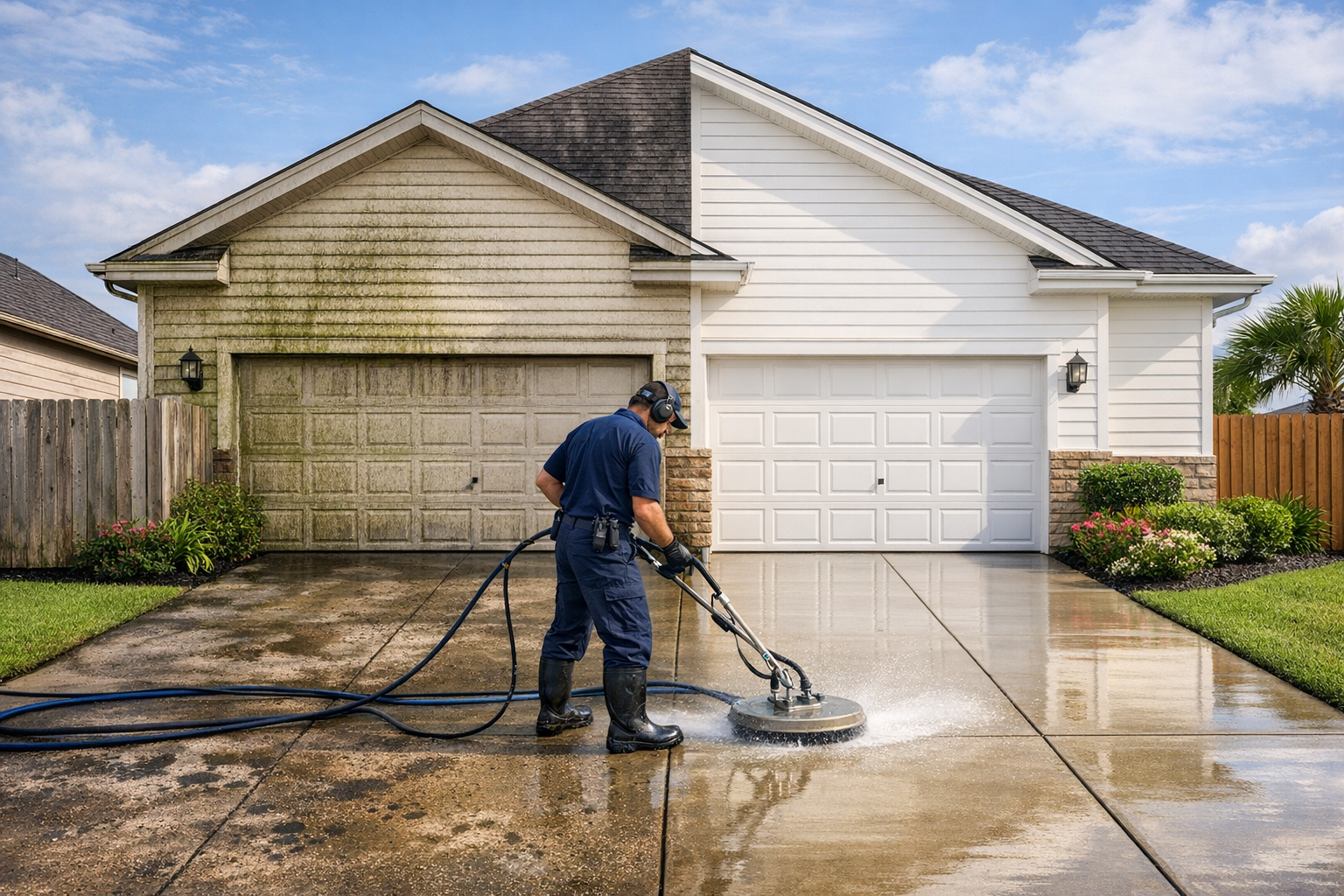
- Surface cleaner attachment: This rotating tool distributes pressure evenly across the surface, eliminating the zebra-stripe effect that wand-only cleaning causes.
- Correct nozzle tips: A 25-degree (green) or 40-degree (white) tip is safest; avoid the 0-degree (red) tip that concentrates all force into a tiny point.
- Cleaning solutions: Degreasers for oil, sodium hypochlorite blends for organic growth, and specialized rust removers.
The surface cleaner attachment is honestly the single best investment for a uniform result. It covers more ground faster and prevents the wand marks that plague DIY driveway cleaning. Pair it with the right nozzle and you’ll dramatically reduce the risk of etching. We also keep the wand tip at least 12 inches from the surface and maintain a consistent sweeping motion, which prevents concentrated dwell time that can wear grooves into the concrete.
Choosing the Correct Pressure Level
For most residential driveways, we operate between 2,500 and 3,000 PSI when using a surface cleaner. Decorative or stamped concrete should be treated much more gently, often around 1,500 PSI. Testing a small, inconspicuous area first is always smart. If you notice the surface roughening or the aggregate beginning to show, back off immediately and increase your distance from the surface.
Step-by-Step Driveway Cleaning Process
Now that we’ve covered the why and the what, let’s get into the how. This is the exact process we follow on jobs, refined to deliver a spotless result without harming the concrete. Following these steps in order is critical, because skipping pre-treatment or rinsing incorrectly can leave streaks and residue behind.
- Clear the area: Remove vehicles, planters, toys, and anything else from the driveway. Sweep away loose debris, leaves, and dirt.
- Protect surroundings: Wet down nearby plants and grass, and cover delicate landscaping. Cleaning solutions can harm vegetation if not rinsed promptly.
- Pre-treat stains: Apply a degreaser to oil spots and an organic cleaner to mildew or algae. Let the solution dwell for 5 to 10 minutes, but never let it dry on the surface.
- Agitate stubborn spots: Use a stiff-bristle brush on heavily soiled areas to loosen grime before rinsing.
- Clean with the surface cleaner: Work in overlapping passes, moving slowly and evenly to avoid missed spots and streaks.
- Edge and detail: Use the wand with a wide-angle tip to clean edges, corners, and expansion joints the surface cleaner can’t reach.
- Rinse thoroughly: Flush the entire driveway, pushing dirty water toward the street or drain, and rinse surrounding plants again.
Patience is the theme here. The temptation to rush through with high pressure often results in uneven cleaning and potential damage. Taking the time to pre-treat and work methodically yields a far superior and safer outcome. On a typical two-car driveway, this process takes us a couple of hours, and the difference in the finished result is night and day compared to a quick wand-only blast.
Removing Tough Stains Without Harsh Damage
Certain stains require special attention, and this is where many homeowners accidentally damage their concrete by over-applying pressure or using the wrong chemicals. Let’s break down the most common problem stains and how we tackle each one safely.
Oil and grease stains are the most frequent challenge. We apply a dedicated concrete degreaser and let it penetrate, then agitate with a brush before rinsing. For deep, set-in oil, a poultice made from an absorbent material and solvent can draw the stain out of the pores over 24 hours. Never rely on raw pressure alone for oil; it won’t lift the stain and may damage the surface in the attempt.
Rust stains from metal furniture or fertilizer require an acid-based or oxalic acid rust remover, applied carefully and neutralized afterward. These products are effective but can etch concrete if left too long, so timing matters.
Organic growth like algae, moss, and mildew responds beautifully to a sodium hypochlorite solution. This is the preferred method of soft washing, which cleans without high pressure. According to resources from the EPA, proper chemical handling and runoff management protect both your property and the local environment, so we always follow responsible application practices.
- Tire marks: Degreaser plus agitation, similar to oil treatment.
- Paint spills: Spot treatment with a paint-specific stripper rather than blasting.
- Efflorescence: A mild acidic cleaner removes the white mineral deposits that migrate to the surface.
The key lesson across all these stains is to match the cleaning agent to the problem. Letting the right chemistry do the work means you can keep the pressure moderate, which protects your concrete from etching, pitting, and the premature wear that aggressive cleaning causes.
Protecting and Maintaining Your Clean Driveway
Getting your driveway spotless is only half the battle. To make that clean last and to keep the concrete healthy for years, we strongly recommend a maintenance routine and protective sealing. A freshly cleaned driveway is the perfect canvas for a quality concrete sealer, which repels oil, water, and stains while making future driveway cleaning dramatically easier.
Here’s how we help clients maintain their results long-term:
- Apply a concrete sealer: After the driveway is fully dry (usually 24 to 48 hours), a penetrating or film-forming sealer adds a protective barrier that lasts two to three years.
- Address spills quickly: Blot oil and chemical spills immediately before they soak into the pores.
- Sweep regularly: Removing debris prevents organic growth and surface staining.
- Rinse periodically: A light rinse every few weeks keeps dirt from accumulating and setting in.
- Schedule professional cleaning: An annual deep clean keeps your concrete looking new and catches small issues before they grow.
Sealing is particularly valuable because it reduces how hard you have to work during each cleaning. A sealed surface releases stains far more readily, meaning you can use lower pressure and milder solutions going forward. This protective cycle extends the life of your concrete and keeps your curb appeal consistently high.
When to Call the Professionals
While many homeowners can handle routine maintenance, certain situations call for professional expertise. If you’re dealing with large oil stains, extensive organic growth, decorative concrete, or signs of damage like spalling and deep cracks, bringing in a pro protects your investment. We have the commercial-grade equipment, proper chemicals, and trained experience to clean effectively without risking the concrete. The cost of a professional cleaning is almost always less than the cost of repairing a driveway damaged by improper DIY attempts.
Bringing It All Together for a Spotless, Safe Driveway
Achieving a spotless driveway without damaging the concrete comes down to a few core principles: understand your surface, use the right tools and moderate pressure, let cleaning solutions do the heavy lifting, treat tough stains with targeted methods, and protect your investment with sealing and regular maintenance. When you follow this approach, you get lasting curb appeal rather than a short-lived shine followed by regret. Driveway cleaning done correctly is an art of balance, combining power with precision and patience.
If you’d rather leave it to the experts, or you simply want guaranteed results without the risk, we’re here to help. Our team specializes in safe, thorough driveway cleaning that transforms your concrete while protecting it for the long haul. Visit us at All In One Pressure Washing Services to schedule your free estimate and see the difference professional care makes. Let us bring back that like-new shine to your driveway today.