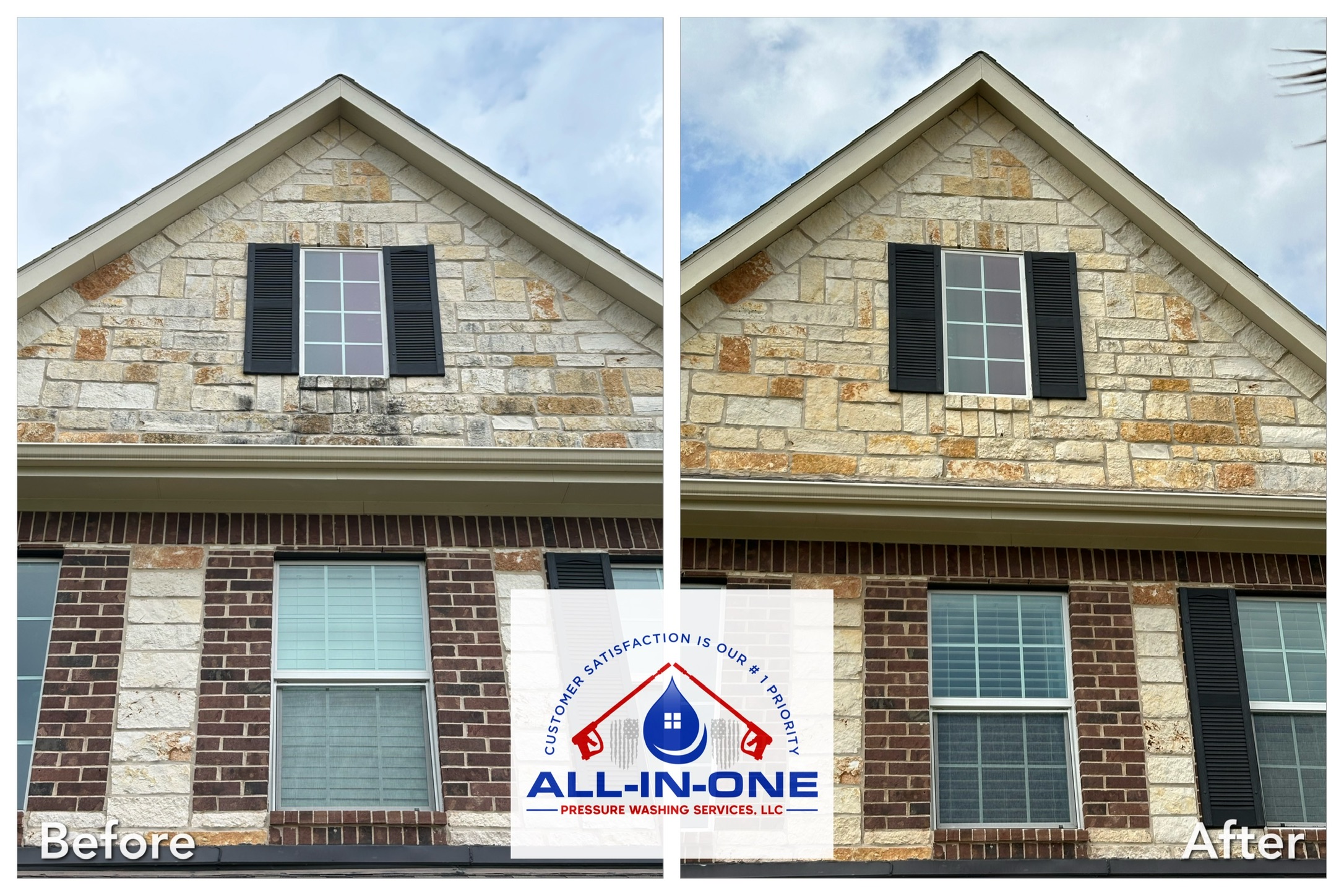
Brick is one of the most durable and beautiful building materials out there, but even the toughest brick needs a little care when it’s time to clean. If you’ve ever stared at a dingy, moss-stained brick wall and thought about blasting it clean with a pressure washer, you’re not alone. The problem is that aggressive brick cleaning can do more harm than good, cracking mortar, etching the surface, and forcing water deep into your walls. Over the years, we’ve cleaned thousands of square feet of brick, and we’ve learned exactly how to restore that fresh, like-new look without causing damage. In this guide, we’ll walk you through everything we know about safely pressure washing brick, from choosing the right equipment to the techniques that protect your investment.
Why Brick Cleaning Requires a Careful Approach
Brick may look rock-solid, but it’s actually a porous material held together by mortar that’s far softer than the brick itself. When we tackle any brick cleaning project, we always remind homeowners that the weakest link isn’t the brick, it’s the joints between them. Too much pressure can blow out mortar, leaving gaps that let moisture seep behind the wall where it causes real structural trouble.
Older brick homes are especially vulnerable. Historic brick and lime-based mortar were never designed to withstand modern high-pressure equipment. We’ve seen DIY projects strip the protective outer layer of brick, exposing the softer interior and dramatically accelerating weathering. That’s why the “more power is better” mindset simply doesn’t apply here.
Here are the main risks we work hard to avoid on every job:
- Mortar erosion that weakens the entire wall structure
- Surface etching that leaves brick rough and more prone to staining
- Water intrusion leading to mold, efflorescence, and interior damage
- Spalling, where the brick face flakes and crumbles over time
Understanding these risks is the foundation of safe cleaning. Once you respect how delicate brick can be, you naturally shift toward gentler, smarter methods that deliver stunning results without the collateral damage. That balance between effectiveness and protection is what separates professional work from a weekend experiment gone wrong.
Choosing the Right Equipment and Pressure Settings
The equipment you choose makes all the difference in brick cleaning. A common mistake is reaching for a maxed-out gas pressure washer and a narrow, pinpoint nozzle. That combination can exceed 3,000 PSI at the surface, which is more than enough to destroy mortar in seconds. We take a much more measured approach.
For most brick surfaces, we recommend staying in a controlled, moderate range. Here’s a general guideline we follow:
- Pressure: 1,200 to 1,500 PSI for sound, modern brick; lower for older or soft brick
- Nozzle: A 25-degree (green) or 40-degree (white) wide-angle tip to disperse force
- Distance: Keep the nozzle 12 to 18 inches from the surface at all times
- Flow: A machine with higher GPM lets you clean effectively at lower pressure
Why Soft Washing Often Wins
For many brick projects, we actually prefer soft washing over traditional high-pressure cleaning. Soft washing uses specialized low-pressure equipment combined with professional-grade cleaning solutions that break down algae, mold, and grime chemically rather than by brute force. This method is gentle enough to protect mortar while still delivering a deep, lasting clean.
Soft washing is especially valuable for heavily stained or organic growth, since the cleaning agents kill spores at the root. That means the results last longer, and you won’t see those green and black streaks return within a few months. When we assess a property, we often blend techniques, using soft washing on delicate areas and controlled pressure where it’s truly needed.
Step-by-Step Brick Cleaning Process We Trust
Having a clear, repeatable process keeps our brick cleaning results consistent and safe. We never just walk up and start spraying. Instead, we follow a deliberate sequence that protects the surface and surrounding areas while maximizing cleaning power.
- Inspect the brick and mortar. We look for loose mortar, cracks, spalling, and areas that may need repair before any water touches the wall.
- Protect the surroundings. We cover plants, cap electrical outlets, close windows, and move furniture well clear of the work zone.
- Pre-wet the surface. Saturating the brick with plain water first prevents the cleaning solution from soaking in too deeply and helps it rinse away cleanly.
- Apply a cleaning solution. We use a biodegradable detergent or a diluted sodium hypochlorite mix for organic stains, letting it dwell for several minutes.
- Clean with controlled pressure or soft wash. Working top to bottom in overlapping passes, we keep consistent distance and angle.
- Rinse thoroughly. We flush the surface from the top down to carry away loosened grime and leftover detergent.
- Inspect and spot-treat. Any stubborn areas get a second, gentle round of attention rather than more pressure.
One detail that matters enormously is working methodically from top to bottom during the final rinse, but bottom to top during application in some cases to prevent streaking. Little professional habits like these are the reason our finished walls look uniform instead of blotchy. We also test any cleaning solution on a small, inconspicuous section first to confirm it won’t discolor the brick.
Common Mistakes to Avoid During Brick Cleaning
We’ve been called in to repair plenty of well-intentioned DIY jobs, and the mistakes tend to repeat themselves. Knowing what to avoid is just as important as knowing what to do. Here are the errors we see most often and how we steer clear of them.
- Using too much pressure. This is the number one cause of permanent brick and mortar damage. More PSI almost never equals a better result.
- Holding the nozzle too close. Even moderate pressure becomes destructive at point-blank range. Distance is your friend.
- Skipping the cleaning solution. Relying on water pressure alone forces you to crank up the machine, when a good detergent does the heavy lifting gently.
- Cleaning in direct sun or freezing temperatures. Hot surfaces cause solutions to dry too fast, and freezing can trap water in the brick and crack it.
- Ignoring loose mortar. Spraying a wall with failing joints drives water inside and worsens existing damage.
- Using the wrong chemicals. Harsh acids can burn brick and alter its color if not properly diluted and neutralized.
Another overlooked issue is efflorescence, the white, powdery residue that sometimes appears on brick. Many people try to blast it away, but efflorescence is a sign of moisture moving through the masonry. It requires a specific cleaning product and an understanding of the underlying moisture problem, not just raw pressure. We address the cause, not only the symptom, so the staining doesn’t keep coming back.
Finally, patience pays off. Rushing a brick cleaning job almost always leads to uneven results or damage. We let cleaning solutions dwell properly and resist the temptation to speed things up with more force. Good brick cleaning is a slow, steady craft, and respecting that rhythm protects your home for decades.
When to Call a Professional for Brick Cleaning
There are plenty of light maintenance tasks a confident homeowner can handle, but certain situations really call for professional help. We always encourage people to be honest about the scope and risk of their project before they begin.
You should strongly consider hiring a pro when:
- Your home features historic or soft brick that can’t tolerate much pressure
- There’s significant mortar damage that needs repointing before cleaning
- You’re dealing with stubborn stains like paint, graffiti, or deep oil
- The surface involves heights or ladders that make the work unsafe
- You see widespread efflorescence or mold indicating moisture issues
What Professional Brick Cleaning Delivers
When you bring in a trained team, you’re not just paying for muscle, you’re paying for judgment. We read each surface, adjust our approach in real time, and carry the right equipment and solutions for every scenario. According to the Environmental Protection Agency, proper handling and disposal of cleaning chemicals matters for both your property and the surrounding environment, and professionals are trained to manage runoff responsibly.
We also provide peace of mind. Our work is backed by experience, insurance, and a genuine commitment to protecting your property. Instead of guessing whether your mortar can handle a given setting, you get results from people who clean brick for a living. That expertise consistently pays for itself in avoided repairs and longer-lasting curb appeal.
Protecting Your Brick for the Long Haul
Cleaning is only half the equation. Once your brick is sparkling again, a few smart maintenance habits will keep it that way and reduce how often it needs deep cleaning. We always share these tips with our clients so they can protect their investment year-round.
- Apply a breathable masonry sealer. The right sealer repels water and stains while still letting the brick breathe, preventing trapped moisture.
- Manage nearby vegetation. Trim shrubs and trees so airflow and sunlight reach the brick, discouraging mold and algae growth.
- Address drainage issues. Redirect downspouts and sprinklers that constantly soak your walls and accelerate staining.
- Schedule periodic maintenance. A gentle wash every couple of years is far easier than tackling years of built-up grime.
- Repoint failing mortar promptly. Fixing small gaps early prevents water intrusion and keeps the whole wall sound.
Consistency is everything. A little attention over time means you’ll never have to resort to aggressive, risky cleaning methods to recover a severely neglected wall. We find that homes with a simple maintenance routine stay beautiful with minimal effort, and their brick lasts generations longer than homes left to the elements.
Think of your brick the way you’d think of any valuable surface in your home. Gentle, regular care beats drastic intervention every single time. When you treat your masonry with that mindset, pressure washing becomes a safe, refreshing tune-up rather than a gamble with your home’s structure.
Safe, effective brick cleaning really comes down to respecting the material, choosing moderate pressure or soft washing, following a careful step-by-step process, and avoiding the common mistakes that cause lasting damage. When you combine the right technique with thoughtful maintenance, you get beautiful, durable brick that elevates your entire property without the risk. Whether you take on a light cleaning yourself or bring in experienced help for the tougher jobs, the goal is always the same: brilliant results and zero damage. If you’d like your brick cleaned the right way by a team that treats your home like our own, reach out to us at All In One Pressure Washing Services and let’s bring your brick back to life.